P Defying the Market Downturn: HLB and Daewon Pharmaceutical Surge on Earnings Growth Expectations ...
created on 11/02/2026 6:00:12 AM
Unauthorized reproduction or distribution is illegal and subject to criminal penalties.
Pharm Edaily enforces a zero-tolerance policy and will take strict action.
Pharm Edaily enforces a zero-tolerance policy and will take strict action.
This article was released as Pharm Edaily Premium Content on 11/02/2026 6:00:12 AM
Subscribe
[Yu Jin-hee, Edaily Reporter] Even as the domestic stock market faced downward pressure on October 30 due to mounting external and internal uncertainties, select companies across the pharmaceutical, biotechnology, and healthcare sectors demonstrated remarkable resilience on the back of solid financial performance and tangible commercial milestones. In contrast to speculative theme stocks facing steep valuation corrections, investor capital—seeking both bargain opportunities and earnings defense—flowed decisively into companies backed by verified profitability and global regulatory momentum.
According to financial intelligence platform KG Zeroin MP Doctor, four healthcare companies ranked among the “Top 20 Gainers” across the entire domestic market on the day: HLB BioStep, HLB Therapeutics, iCure, and Daewon Pharmaceutical.
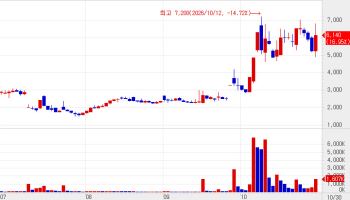
HLB BioStep surged 16.95% (up 890 KRW) to close at 6,140 KRW, while fellow affiliate HLB Therapeutics rose 11.88% (up 1,130 KRW) to finish at 10,640 KRW. Meanwhile, iCure—which recently cleared a long-standing trading suspension after turning an operating profit for the first time in nine years—jumped 11.60% (up 159 KRW) to 1,530 KRW. Mainboard (KOSPI) listed Daewon Pharmaceutical also advanced 11.56% (up 890 KRW) to end at 8,590 KRW following the successful completion of a Phase 3 trial for its novel potassium-competitive acid blocker (P-CAB).
HLB Group Gains Momentum on Commercialization of FDA-Approved Drug and Leadership‘s Share Purchases
HLB Group drove broad-based gains across its affiliates by accelerating commercialization efforts following U.S. Food and Drug Administration (FDA) approval of its bile duct cancer treatment, building on the foundation of its liver cancer franchise. The rally was primarily fueled by commercial execution for “Lyrfigtu” (lirafugratinib), developed by U.S. subsidiary Elevar Therapeutics. Lyrfigtu secured FDA marketing approval in September for adult patients with previously treated, unresectable locally advanced or metastatic cholangiocarcinoma harboring FGFR2 gene fusions or rearrangements.
Elevar recently hosted a standalone exhibition booth at the European Society for Medical Oncology congress (ESMO 2026) in Madrid, Spain, where company executives held in-depth discussions with global oncologists and distribution partners regarding the upcoming U.S. commercial rollout. Backed by competitive clinical efficacy and safety data, Lyrfigtu is expected to command a 15% to 20% price premium during U.S. payer negotiations compared to incumbent therapies, which typically cost around $30,000 (approx. 40 million KRW) per month. Elevar has also submitted a Marketing Authorization Application (MAA) to the European Medicines Agency (EMA), expanding its commercial reach across Europe.
Investor sentiment was further bolstered by the group’s flexible global partnering strategy. At a recent IR Day in Seoul, HLB Group Chairman Yang-gon Jin indicated that while the company maintains an initial direct-to-market strategy, it remains open to strategic partnerships if global big pharma proposals offer broader distribution reach or clinical expansion across additional tumor types.
Concurrently, the group‘s flagship combination therapy of rivoceranib and camrelizumab as a first-line treatment for hepatocellular carcinoma (HCC) is advancing through FDA resubmission. Following the remediation of manufacturing inspection observations, the company anticipates a decision on the classification of its resubmission, with a Class 1 designation potentially enabling final clearance within two months.
Chairman Jin’s consistent open-market purchases have also reinforced market confidence. Through his 99%-owned investment firm Epoche and personal holdings, Jin completed 15 consecutive open-market share purchases in key affiliates, including HLB Therapeutics, HLB Innovation, and HLB Genex. With major clinical catalysts approaching—such as the upcoming Phase 3 top-line data release for neurotrophic keratopathy (NK) treatment RGN-259 by HLB Therapeutics—the group‘s pipeline valuation is expected to undergo further rerating.
“While meticulously preparing for the successful U.S. launch of Lyrfigtu, we are steadily executing our clinical milestones across our broader oncology pipeline, including rivoceranib,” an official from HLB Group stated. “The leadership’s sustained equity purchases underscore strong internal confidence in the group‘s long-term enterprise value.”
Daewon Pharmaceutical Rallies on Successful Phase 3 P-CAB Trial and Sustained-Release Formulation Play
Daewon Pharmaceutical saw its shares jump following the announcement of successful Phase 3 trial results for its next-generation gastroesophageal reflux disease (GERD) drug, paired with an aggressive commercial push into the dyslipidemia market. The company officially disclosed that its novel P-CAB candidate, padoprazan (DW4421), successfully met its primary efficacy endpoint, proving non-inferiority against the standard proton pump inhibitor (PPI) esomeprazole.
The multicenter, double-blind Phase 3 study evaluated 328 patients with erosive esophagitis (EE) across 22 major hospital sites in South Korea. Patients receiving padoprazan at 20 mg and 40 mg doses demonstrated mucosal healing rates comparable to those treated with esomeprazole 40 mg. The incidence of adverse drug reactions showed no statistically significant difference between cohorts, confirming a favorable tolerability profile.
Unlike conventional PPIs, P-CAB therapies offer rapid onset of action and can be administered irrespective of meal timing. With the domestic P-CAB outpatient prescription market surpassing 400 billion KRW annually, Daewon Pharmaceutical plans to file for marketing authorization with the Ministry of Food and Drug Safety (MFDS) within the year, while simultaneously conducting Phase 3 trials in non-erosive reflux disease (NERD) to expand indications.
In chronic disease management, Daewon is expanding its commercial pipeline through Uptava SR Tab, a fixed-dose combination of pitavastatin calcium and fenofibrate choline targeting Korea’s 55 billion KRW dyslipidemia combination market.
Uptava SR Tab incorporates proprietary formulation engineering to reduce tablet volume by 43% compared to conventional capsules, significantly easing pill burden for polypharmacy patients. By utilizing a hydrophilic choline salt, the formulation eliminates the need for post-prandial dosing, allowing patients to take the medication on an empty stomach.
In Phase 3 trials, the combination demonstrated a 40% reduction in triglyceride levels and a 21% increase in high-density lipoprotein (HDL) cholesterol compared to pitavastatin monotherapy. By transitioning to in-house manufacturing, Daewon has improved production economics, targeting annual outpatient prescriptions of 13 billion KRW next year to build a staple commercial brand.
“The Phase 3 validation of padoprazan provides a solid springboard for Daewon to emerge as a leading player in the rapidly expanding P-CAB digestive market,” an official from Daewon Pharmaceutical noted. “Coupled with the enhanced patient convenience offered by Uptava SR Tab, we aim to drive both top-line growth and operating profitability.”
iCure Accelerates Turnaround via Nine-Year Profit Milestone and Governance Overhaul
iCure‘s double-digit gain reflected strong market relief following the resolution of its nearly one-year trading suspension, accompanied by a return to operating profitability for the first time in nine years. The Korea Exchange cleared the company to resume trading last month after completing a listing eligibility review. Governance stability was reinforced through a 25 billion KRW third-party allotment rights offering, which established SoluM Cosmetics as the largest shareholder under a voluntary three-year lock-up commitment.
Operational restructuring translated quickly into financial results. In the first half of this year, iCure recorded standalone revenue of 69.7 billion KRW, marking an 80% year-over-year increase. More importantly, operating income turned positive on both a consolidated and standalone basis, snapping a nine-year streak of standalone operating losses.
The turnaround was spearheaded by the company’s cosmetics original design manufacturing (ODM) division. As independent K-beauty brands gained market share globally, procurement orders for iCure‘s functional skincare formulations, patented hydrogel mask sheets, and soft capsules expanded substantially. Advanced manufacturing facilities certified under CGMP and ISO 22716 supported timely fulfillment of large-scale international contracts.
The company’s formulation capabilities were also recognized internationally. Its proprietary “ELECTRAGON GEL CREAM” was named the sole South Korean finalist in the skincare formula category at the Cosmopack Asia Awards 2026. The formulation was praised for delivering “device-like” skincare efficacy through a complex emulsion gel system enriched with dragon fruit stem cell extracts.
Direct exports are scaling across international retail channels, including Amway China, Russia‘s Gold Apple, and Kiss New York in the United States.
“Having fully resolved past governance overhangs through the resumption of trading, our core cosmetics ODM momentum enabled a milestone operating turnaround,” an iCure representative stated. “We will continue to strengthen our proprietary formulation capabilities and diversify our global client base to sustain profitable growth.”
According to financial intelligence platform KG Zeroin MP Doctor, four healthcare companies ranked among the “Top 20 Gainers” across the entire domestic market on the day: HLB BioStep, HLB Therapeutics, iCure, and Daewon Pharmaceutical.
HLB BioStep surged 16.95% (up 890 KRW) to close at 6,140 KRW, while fellow affiliate HLB Therapeutics rose 11.88% (up 1,130 KRW) to finish at 10,640 KRW. Meanwhile, iCure—which recently cleared a long-standing trading suspension after turning an operating profit for the first time in nine years—jumped 11.60% (up 159 KRW) to 1,530 KRW. Mainboard (KOSPI) listed Daewon Pharmaceutical also advanced 11.56% (up 890 KRW) to end at 8,590 KRW following the successful completion of a Phase 3 trial for its novel potassium-competitive acid blocker (P-CAB).
|
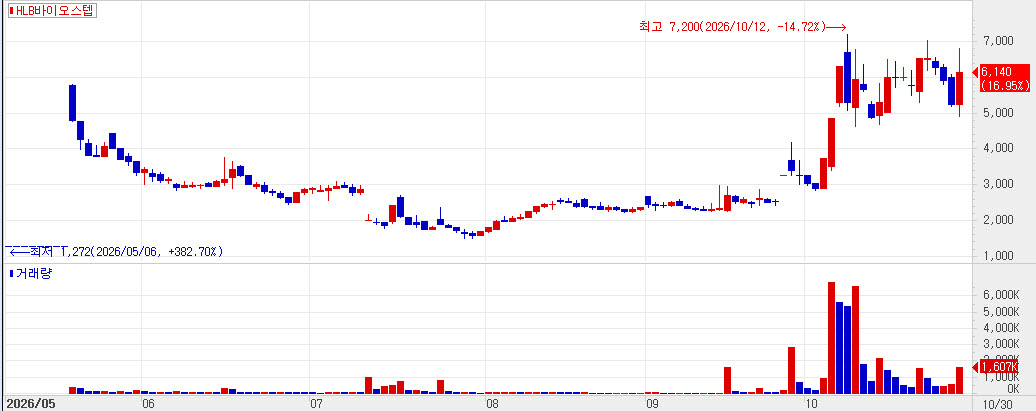
HLB Group drove broad-based gains across its affiliates by accelerating commercialization efforts following U.S. Food and Drug Administration (FDA) approval of its bile duct cancer treatment, building on the foundation of its liver cancer franchise. The rally was primarily fueled by commercial execution for “Lyrfigtu” (lirafugratinib), developed by U.S. subsidiary Elevar Therapeutics. Lyrfigtu secured FDA marketing approval in September for adult patients with previously treated, unresectable locally advanced or metastatic cholangiocarcinoma harboring FGFR2 gene fusions or rearrangements.
Elevar recently hosted a standalone exhibition booth at the European Society for Medical Oncology congress (ESMO 2026) in Madrid, Spain, where company executives held in-depth discussions with global oncologists and distribution partners regarding the upcoming U.S. commercial rollout. Backed by competitive clinical efficacy and safety data, Lyrfigtu is expected to command a 15% to 20% price premium during U.S. payer negotiations compared to incumbent therapies, which typically cost around $30,000 (approx. 40 million KRW) per month. Elevar has also submitted a Marketing Authorization Application (MAA) to the European Medicines Agency (EMA), expanding its commercial reach across Europe.
Investor sentiment was further bolstered by the group’s flexible global partnering strategy. At a recent IR Day in Seoul, HLB Group Chairman Yang-gon Jin indicated that while the company maintains an initial direct-to-market strategy, it remains open to strategic partnerships if global big pharma proposals offer broader distribution reach or clinical expansion across additional tumor types.
Concurrently, the group‘s flagship combination therapy of rivoceranib and camrelizumab as a first-line treatment for hepatocellular carcinoma (HCC) is advancing through FDA resubmission. Following the remediation of manufacturing inspection observations, the company anticipates a decision on the classification of its resubmission, with a Class 1 designation potentially enabling final clearance within two months.
Chairman Jin’s consistent open-market purchases have also reinforced market confidence. Through his 99%-owned investment firm Epoche and personal holdings, Jin completed 15 consecutive open-market share purchases in key affiliates, including HLB Therapeutics, HLB Innovation, and HLB Genex. With major clinical catalysts approaching—such as the upcoming Phase 3 top-line data release for neurotrophic keratopathy (NK) treatment RGN-259 by HLB Therapeutics—the group‘s pipeline valuation is expected to undergo further rerating.
“While meticulously preparing for the successful U.S. launch of Lyrfigtu, we are steadily executing our clinical milestones across our broader oncology pipeline, including rivoceranib,” an official from HLB Group stated. “The leadership’s sustained equity purchases underscore strong internal confidence in the group‘s long-term enterprise value.”
|
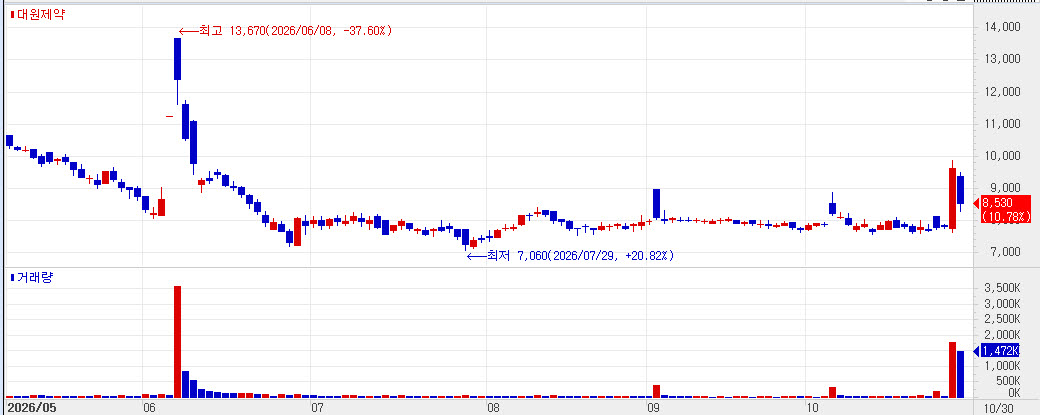
Daewon Pharmaceutical saw its shares jump following the announcement of successful Phase 3 trial results for its next-generation gastroesophageal reflux disease (GERD) drug, paired with an aggressive commercial push into the dyslipidemia market. The company officially disclosed that its novel P-CAB candidate, padoprazan (DW4421), successfully met its primary efficacy endpoint, proving non-inferiority against the standard proton pump inhibitor (PPI) esomeprazole.
The multicenter, double-blind Phase 3 study evaluated 328 patients with erosive esophagitis (EE) across 22 major hospital sites in South Korea. Patients receiving padoprazan at 20 mg and 40 mg doses demonstrated mucosal healing rates comparable to those treated with esomeprazole 40 mg. The incidence of adverse drug reactions showed no statistically significant difference between cohorts, confirming a favorable tolerability profile.
Unlike conventional PPIs, P-CAB therapies offer rapid onset of action and can be administered irrespective of meal timing. With the domestic P-CAB outpatient prescription market surpassing 400 billion KRW annually, Daewon Pharmaceutical plans to file for marketing authorization with the Ministry of Food and Drug Safety (MFDS) within the year, while simultaneously conducting Phase 3 trials in non-erosive reflux disease (NERD) to expand indications.
In chronic disease management, Daewon is expanding its commercial pipeline through Uptava SR Tab, a fixed-dose combination of pitavastatin calcium and fenofibrate choline targeting Korea’s 55 billion KRW dyslipidemia combination market.
Uptava SR Tab incorporates proprietary formulation engineering to reduce tablet volume by 43% compared to conventional capsules, significantly easing pill burden for polypharmacy patients. By utilizing a hydrophilic choline salt, the formulation eliminates the need for post-prandial dosing, allowing patients to take the medication on an empty stomach.
In Phase 3 trials, the combination demonstrated a 40% reduction in triglyceride levels and a 21% increase in high-density lipoprotein (HDL) cholesterol compared to pitavastatin monotherapy. By transitioning to in-house manufacturing, Daewon has improved production economics, targeting annual outpatient prescriptions of 13 billion KRW next year to build a staple commercial brand.
“The Phase 3 validation of padoprazan provides a solid springboard for Daewon to emerge as a leading player in the rapidly expanding P-CAB digestive market,” an official from Daewon Pharmaceutical noted. “Coupled with the enhanced patient convenience offered by Uptava SR Tab, we aim to drive both top-line growth and operating profitability.”
|
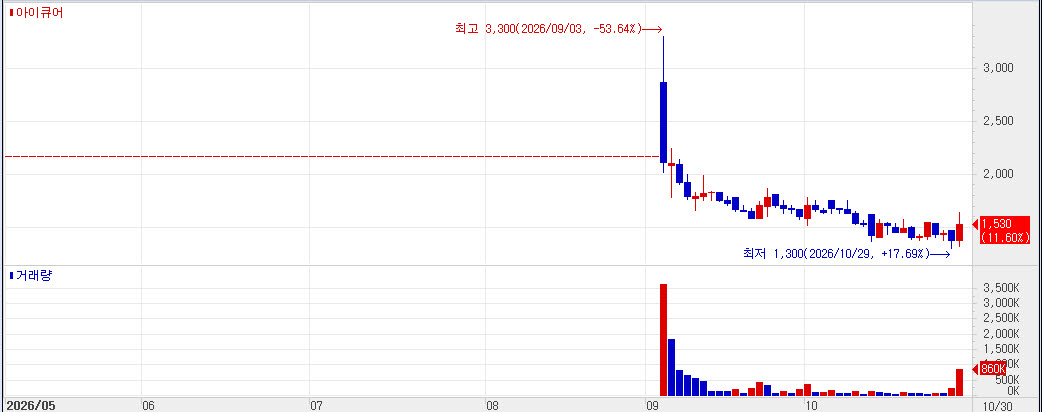
iCure‘s double-digit gain reflected strong market relief following the resolution of its nearly one-year trading suspension, accompanied by a return to operating profitability for the first time in nine years. The Korea Exchange cleared the company to resume trading last month after completing a listing eligibility review. Governance stability was reinforced through a 25 billion KRW third-party allotment rights offering, which established SoluM Cosmetics as the largest shareholder under a voluntary three-year lock-up commitment.
Operational restructuring translated quickly into financial results. In the first half of this year, iCure recorded standalone revenue of 69.7 billion KRW, marking an 80% year-over-year increase. More importantly, operating income turned positive on both a consolidated and standalone basis, snapping a nine-year streak of standalone operating losses.
The turnaround was spearheaded by the company’s cosmetics original design manufacturing (ODM) division. As independent K-beauty brands gained market share globally, procurement orders for iCure‘s functional skincare formulations, patented hydrogel mask sheets, and soft capsules expanded substantially. Advanced manufacturing facilities certified under CGMP and ISO 22716 supported timely fulfillment of large-scale international contracts.
The company’s formulation capabilities were also recognized internationally. Its proprietary “ELECTRAGON GEL CREAM” was named the sole South Korean finalist in the skincare formula category at the Cosmopack Asia Awards 2026. The formulation was praised for delivering “device-like” skincare efficacy through a complex emulsion gel system enriched with dragon fruit stem cell extracts.
Direct exports are scaling across international retail channels, including Amway China, Russia‘s Gold Apple, and Kiss New York in the United States.
“Having fully resolved past governance overhangs through the resumption of trading, our core cosmetics ODM momentum enabled a milestone operating turnaround,” an iCure representative stated. “We will continue to strengthen our proprietary formulation capabilities and diversify our global client base to sustain profitable growth.”
유진희 sadend@


함께보면 좋은 뉴스