P Bio Sector Joins Market Rally...Genexine, Ray and Pangen Surge[K-Bio Pulse]
created on 04/16/2026 8:00:05 AM
Unauthorized reproduction or distribution is illegal and subject to criminal penalties.
Pharm Edaily enforces a zero-tolerance policy and will take strict action.
Pharm Edaily enforces a zero-tolerance policy and will take strict action.
This article was released as Pharm Edaily Premium Content on 04/16/2026 8:00:05 AM
Subscribe
[Yu Jin-hee, Edaily Reporter] On April 15, the South Korean biotechnology sector carried forward its high-growth momentum, contributing to an overall market rally.
Investor sentiment shifted sharply toward stocks that have recently resolved long standing legal risks or announced the beginning of major management control disputes. In particular, “high-conviction” stocks those aggressively expanding their business domains based on stable governance structures led the gains in the bio sector, heating up the market.
Genexine Shakes Off $150M Litigation Shadow: A Brilliant Revival on “Victory Momentum”
According to KG Zeroin MP Doctor, Genexine, Ray, and Pangen topped the list of bio-sector gainers on the domestic stock market that day. Stock prices soared across the board Genexine rose 27.93% (closing at 6,390 won), Ray jumped 21.27% (10,720 won), and Pangen climbed 13.91% (6,550 won). These double-digit gains suggest the domestic bio sector is moving beyond simple thematic trading into a phase of substantial corporate value recovery.
Genexine played the role of the sector leader, with its stock price nearing the upper limit during intraday trading. The primary driver was the news of a “complete victory” in a $150 million (approx. 200 billion won) international arbitration case filed by Ichor Medical Systems, a U.S.-based medical device company.
The International Chamber of Commerce (ICC) International Court of Arbitration dismissed all claims made by Ichor and ordered the claimant to bear all legal and attorney fees incurred by Genexine.
This dispute, which began over disagreements regarding a 2016 contract for electroporation devices used in cervical cancer DNA vaccine trials, had been a decade long hurdle weighing down Genexine‘s financial and psychological outlook. With this final, non-appealable ruling, Genexine has completely escaped the shadow of a massive potential liability.
“This ruling is a result of the international recognition of Genexine’s faithful fulfillment of its contractual obligations and the legitimacy of our business execution,” said a Genexine official. “With the long-standing legal dispute resolved, we have established an environment where we can concentrate all corporate resources on developing core pipelines and expanding our global business.”
Indeed, Genexine is accelerating the commercialization of ‘GX-BP1,’ a pipeline based on its next-generation Targeted Protein Degradation (TPD) platform. The company has successfully completed animal testing and established an Investigational New Drug (IND) package for Phase 1 clinical trials.
Analysts predict that since the superiority of Genexine‘s platform technology was indirectly proven through this victory, the company will hold a favorable position in license-out (L/O) negotiations with global Big Pharma.
From Management Disputes to Global Expansion: The Surge of “Dental Powerhouse” Ray
Ray a specialist in dental digital medical devices, received the market spotlight with a surge of over 20%. The sharp rise in Ray’s stock was fueled by a potent combination of capital market issues specifically a potential management dispute with MegaGen Implant and the company‘s global expansion based on unrivaled technology.
According to a disclosure on April 8, MegaGen Implant acquired a 5% stake in Ray, explicitly stating the purpose as “influencing management rights.” The news that MegaGen had been collecting shares through market purchases without prior consultation with Ray’s management stimulated investor sentiment, sparking expectations of a fierce competition for control.
Industry analysts suggest that MegaGen, ahead of its own IPO, is eyeing Ray‘s unique digital diagnostic equipment technology to enhance its own corporate value.
Ray is the only company in Korea with a full lineup of dental digital imaging systems. Beyond simple Cone Beam Computed Tomography (CBCT) devices, the company operates an integrated platform that combines AI software and 3D printing technology to provide a one stop solution from diagnosis to treatment.
Leveraging this technological prowess, Ray has successfully diversified its revenue structure by establishing local subsidiaries in 13 countries including France, China, and India.
“Ray is already achieving tangible results in advanced markets like North America and Europe with its AI solutions capable of processing high capacity data and precision 3D scanning technology,” said an industry insider.
“While the unique situation of a management dispute is increasing stock volatility, the company holds sufficient value as a global leader elevating the status of ’K-Medical Devices‘ in terms of fundamentals.”
However, the Korea Exchange has designated Ray as an “investment warning stock” due to the rapid price surge, advising investors to exercise caution regarding potential overheating.
A Reliable Ally in Huons: Pangen Leaps with “New Business Wings”
Pangen the biotech subsidiary of the Huons Group took the final spot in the top 3 gainers, backed by solid performance and business expansion. Pangen’s strength resulted from the stabilization of its governance structure through an increased stake by its largest shareholder Huons, combined with the full-scale launch of its high value added new business cell based bioassays.
Huons recently disclosed that it has increased its stake in Pangen to 42.72%. This move is interpreted as a clear commitment to fostering Pangen as the core bio-hub within the group, rather than a mere investment.
With this strong backing, Pangen recently emerged as a leader in the analysis service market by winning a contract from Huons for the bioassay of ‘Liraglutide’ and ‘Semaglutide’ key components of GLP-1 class obesity treatments.
Cell-based bioassays are a process of verifying drug efficacy at the cellular level, requiring high expertise and precise cell line selection. Pangen has accumulated experience in over 140 Contract Development and Manufacturing Organization (CDMO) projects based on platform technologies developed during the creation of its EPO (Erythropoietin) biosimilar.
Currently it boasts overwhelming competitiveness in the custom analysis service sector, holding 41 types of cell lines for therapeutic proteins and antibody production.
Experts predict that since Pangen has secured a stable “captive market” through Huons, its earnings growth will accelerate as revenue from these new businesses begins to reflect in the financial statements.
“We are providing high reliability data and maximizing development efficiency for our clients based on the analytical know how accumulated through our platform technology” a Pangen official stated. “We will aggressively expand our cell-based bioassay service business to preoccupy the efficacy evaluation market for various pharmaceutical fields, as well as biologics.”
Investor sentiment shifted sharply toward stocks that have recently resolved long standing legal risks or announced the beginning of major management control disputes. In particular, “high-conviction” stocks those aggressively expanding their business domains based on stable governance structures led the gains in the bio sector, heating up the market.
|
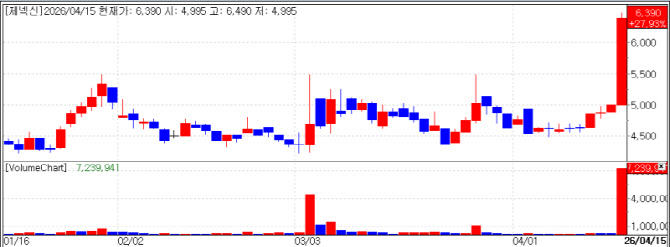
According to KG Zeroin MP Doctor, Genexine, Ray, and Pangen topped the list of bio-sector gainers on the domestic stock market that day. Stock prices soared across the board Genexine rose 27.93% (closing at 6,390 won), Ray jumped 21.27% (10,720 won), and Pangen climbed 13.91% (6,550 won). These double-digit gains suggest the domestic bio sector is moving beyond simple thematic trading into a phase of substantial corporate value recovery.
Genexine played the role of the sector leader, with its stock price nearing the upper limit during intraday trading. The primary driver was the news of a “complete victory” in a $150 million (approx. 200 billion won) international arbitration case filed by Ichor Medical Systems, a U.S.-based medical device company.
The International Chamber of Commerce (ICC) International Court of Arbitration dismissed all claims made by Ichor and ordered the claimant to bear all legal and attorney fees incurred by Genexine.
This dispute, which began over disagreements regarding a 2016 contract for electroporation devices used in cervical cancer DNA vaccine trials, had been a decade long hurdle weighing down Genexine‘s financial and psychological outlook. With this final, non-appealable ruling, Genexine has completely escaped the shadow of a massive potential liability.
“This ruling is a result of the international recognition of Genexine’s faithful fulfillment of its contractual obligations and the legitimacy of our business execution,” said a Genexine official. “With the long-standing legal dispute resolved, we have established an environment where we can concentrate all corporate resources on developing core pipelines and expanding our global business.”
Indeed, Genexine is accelerating the commercialization of ‘GX-BP1,’ a pipeline based on its next-generation Targeted Protein Degradation (TPD) platform. The company has successfully completed animal testing and established an Investigational New Drug (IND) package for Phase 1 clinical trials.
Analysts predict that since the superiority of Genexine‘s platform technology was indirectly proven through this victory, the company will hold a favorable position in license-out (L/O) negotiations with global Big Pharma.
|
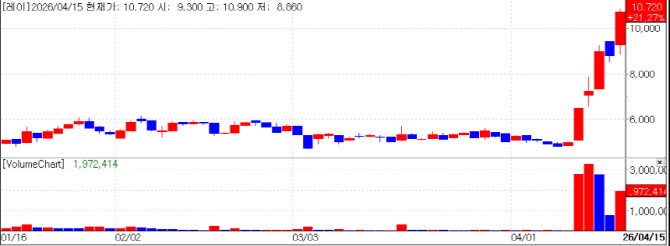
Ray a specialist in dental digital medical devices, received the market spotlight with a surge of over 20%. The sharp rise in Ray’s stock was fueled by a potent combination of capital market issues specifically a potential management dispute with MegaGen Implant and the company‘s global expansion based on unrivaled technology.
According to a disclosure on April 8, MegaGen Implant acquired a 5% stake in Ray, explicitly stating the purpose as “influencing management rights.” The news that MegaGen had been collecting shares through market purchases without prior consultation with Ray’s management stimulated investor sentiment, sparking expectations of a fierce competition for control.
Industry analysts suggest that MegaGen, ahead of its own IPO, is eyeing Ray‘s unique digital diagnostic equipment technology to enhance its own corporate value.
Ray is the only company in Korea with a full lineup of dental digital imaging systems. Beyond simple Cone Beam Computed Tomography (CBCT) devices, the company operates an integrated platform that combines AI software and 3D printing technology to provide a one stop solution from diagnosis to treatment.
Leveraging this technological prowess, Ray has successfully diversified its revenue structure by establishing local subsidiaries in 13 countries including France, China, and India.
“Ray is already achieving tangible results in advanced markets like North America and Europe with its AI solutions capable of processing high capacity data and precision 3D scanning technology,” said an industry insider.
“While the unique situation of a management dispute is increasing stock volatility, the company holds sufficient value as a global leader elevating the status of ’K-Medical Devices‘ in terms of fundamentals.”
However, the Korea Exchange has designated Ray as an “investment warning stock” due to the rapid price surge, advising investors to exercise caution regarding potential overheating.
|
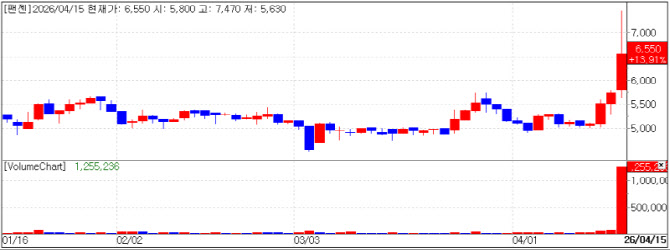
Pangen the biotech subsidiary of the Huons Group took the final spot in the top 3 gainers, backed by solid performance and business expansion. Pangen’s strength resulted from the stabilization of its governance structure through an increased stake by its largest shareholder Huons, combined with the full-scale launch of its high value added new business cell based bioassays.
Huons recently disclosed that it has increased its stake in Pangen to 42.72%. This move is interpreted as a clear commitment to fostering Pangen as the core bio-hub within the group, rather than a mere investment.
With this strong backing, Pangen recently emerged as a leader in the analysis service market by winning a contract from Huons for the bioassay of ‘Liraglutide’ and ‘Semaglutide’ key components of GLP-1 class obesity treatments.
Cell-based bioassays are a process of verifying drug efficacy at the cellular level, requiring high expertise and precise cell line selection. Pangen has accumulated experience in over 140 Contract Development and Manufacturing Organization (CDMO) projects based on platform technologies developed during the creation of its EPO (Erythropoietin) biosimilar.
Currently it boasts overwhelming competitiveness in the custom analysis service sector, holding 41 types of cell lines for therapeutic proteins and antibody production.
Experts predict that since Pangen has secured a stable “captive market” through Huons, its earnings growth will accelerate as revenue from these new businesses begins to reflect in the financial statements.
“We are providing high reliability data and maximizing development efficiency for our clients based on the analytical know how accumulated through our platform technology” a Pangen official stated. “We will aggressively expand our cell-based bioassay service business to preoccupy the efficacy evaluation market for various pharmaceutical fields, as well as biologics.”
유진희 sadend@


함께보면 좋은 뉴스
![Missing Key Data…Samchundang IR Sparks Backlash[K-Bio Pulse]](https://image.edaily.co.kr/images/vision/files/NP/S/2026/04/PS26042201443b.jpg)
!['불성실공시 제재' 촉발한 삼천당 ‘97억 매출’…캐나다 처방액 38억 불과[only 이데일리]](https://image.edaily.co.kr/images/vision/files/NP/S/2026/04/PS26042300397b.jpg)

![美 AACR 약발은 하루뿐?…긍정적 데이터에도 투심 부진[바이오 맥짚기]](https://image.edaily.co.kr/images/Photo/files/NP/S/2026/04/PS26042300579b.jpg)